
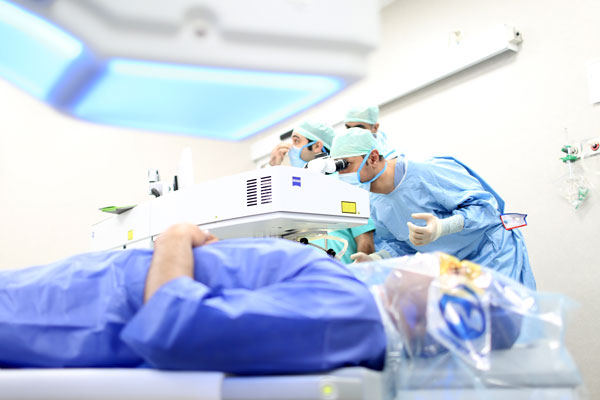
What is SMILE Surgery?
SMILE (Small Incision Lenticule Extraction) is a minimally invasive refractive surgery method performed using a femtosecond laser with an ultra-small corneal incision. By correcting myopia (nearsightedness) and astigmatism, SMILE eliminates the dependence on glasses and contact lenses, significantly enhancing quality of life. This procedure is especially recommended for patients with dry eyes, thinner corneas, and regular contact lens wearers, delivering superior biomechanical precision compared to standard LASIK.
What are the Stages of SMILE Surgery?
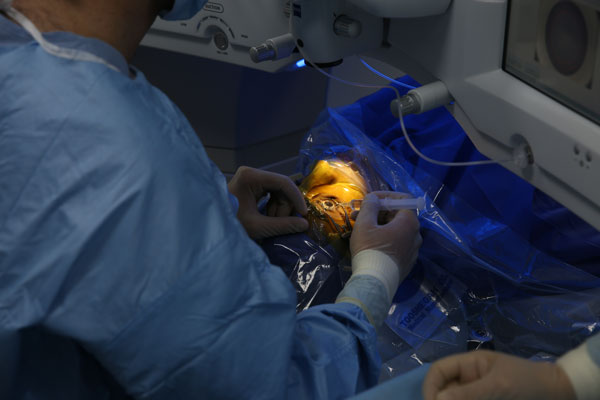
- The laser creates a lenticule (a thin, lens-shaped piece of corneal tissue) within the deeper stromal layers of the cornea, alongside a micro-incision of just 2 mm.
- The surgeon gently extracts the lenticule through this 2 mm opening. Because no flap is created, the anterior corneal structure remains fully stable and intact.
- Removing the lenticule reshapes the corneal curvature and alters the refraction of incoming light, correcting myopia and astigmatism without the need for glasses or lenses. The micro-incision heals naturally without sutures.
Is SMILE Painful?
SMILE is entirely painless. Prior to the procedure, topical anesthetic eye drops are administered, eliminating any need for injections or general anesthesia.
What Screening Tests are Required Before SMILE?
- Refraction and visual acuity measurement
- Intraocular pressure (IOP) assessment
- Corneal topography and tomography imaging
- Dry eye evaluation and tear film quality assessment
- Corneal pachymetry (thickness measurement)
- Comprehensive dilated eye examination
How Long Does SMILE Surgery Take?
The entire SMILE surgical procedure takes approximately 5 minutes in total, with laser delivery lasting only about 25 seconds per eye.
Can SMILE Eliminate Myopia and Astigmatism?
SMILE surgery can correct up to -10.00 diopters of myopia and up to -5.00 diopters of astigmatism.
What Post-Operative Care is Required After SMILE?
- Avoid rubbing the eyes for 2 weeks.
- Prevent water from entering the eyes for 24 hours.
- Refrain from using eye makeup and cosmetics around the ocular area for 2 weeks.
Can Daily Activities Resume Immediately After SMILE?
In general, there are no severe restrictions on daily routines. However, stay away from dusty and smoky environments, and avoid strenuous exercise, swimming, and eye makeup for 2 weeks.
What are the Key Advantages of SMILE Compared to LASIK?
- Minimally invasive corneal disruption
- 100% blade-free
- Painless procedure
- Flapless technique (no flap-related complications)
- Superior preservation of corneal biomechanical integrity
- Significantly lower risk of post-operative dry eye syndrome
- Improved night vision quality
What are the Candidacy Criteria for SMILE?
- Age 18 and older
- General ocular health
- Stable refractive error (no prescription change in the last 6 months)
- Not pregnant or breastfeeding
- Absence of corneal ectatic disorders, retinal degenerations, and severe dry eye
- Absence of systemic diseases affecting ocular health (e.g., lupus, uncontrolled diabetes)
- Soft contact lenses must be discontinued at least 2 weeks prior to examination
- Rigid gas permeable (RGP) contact lenses must be discontinued at least 3 weeks prior to examination
What are the Potential Side Effects of SMILE?
Side effects vary by individual, with the most common being mild haziness and transient dryness. These symptoms are temporary and typically resolve over several weeks.
What is the Recovery Timeline After SMILE?
- First 2–3 Hours: Vision may be slightly hazy accompanied by mild discomfort.
- First 24 Hours: Functional vision often surpasses pre-op uncorrected vision with high patient satisfaction, though mild dry eye and glare/halos may persist.
- First Week: Vision becomes significantly clearer, though slight daily fluctuations can occur.
- Second Week: Sharp, stable vision with minimal diurnal variation; patients achieve full visual satisfaction without glasses.
Can the Prescription Regress?
The probability of refractive regression is minimal—occurring in less than 10% of cases, and typically measuring under 0.50 diopters when present.
What Medications are Prescribed After SMILE?
- Levofloxacin Eye Drops: Every 6 hours for 1 week
- Betamethasone Eye Drops: Every 6 hours for 2 weeks
- Preservative-Free Artificial Tears (Single-Dose): Every 3 hours for 1 month